
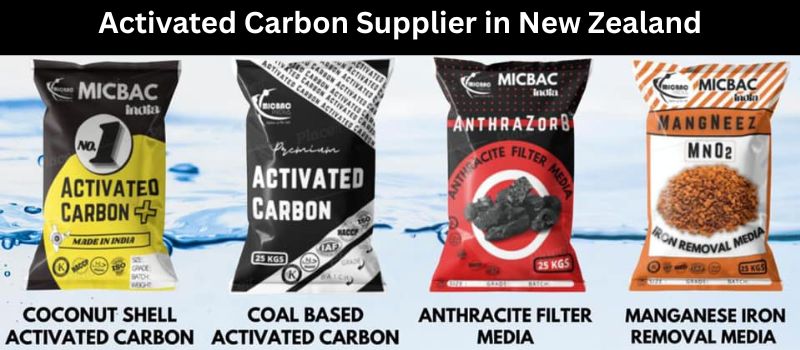
Clean water, efficient industrial processes, and environmental compliance have become priorities across New Zealand’s growing industries. Whether it’s a municipal water treatment facility, a food processing plant, a pharmaceutical manufacturer, or an air purification system, activated carbon plays a critical role in removing contaminants and improving product quality.
However, choosing the right Activated Carbon Supplier in New Zealand involves much more than comparing product specifications. The quality of the carbon, consistency of supply, technical support, and application expertise all influence long-term performance and operating costs.
This guide explains how activated carbon works, where it is used, what factors matter when selecting a supplier, common challenges businesses face, and practical tips for achieving better filtration results. It also explores how businesses such as Micbac India fit into the global activated carbon supply chain by providing a range of activated carbon products for diverse industrial applications.
Understanding Activated Carbon
Activated carbon is a highly porous form of carbon processed to create an enormous internal surface area. These microscopic pores allow it to capture impurities through adsorption, making it one of the most effective filtration materials available.
Unlike ordinary charcoal, activated carbon undergoes specialized activation processes that significantly increase its adsorption capacity. The result is a material capable of removing organic compounds, chlorine, odors, colors, volatile chemicals, and various pollutants from liquids and gases.
Because different contaminants require different pore structures, activated carbon is available in multiple grades designed for specific industrial applications. Selecting the right combination of raw material, pore structure, and particle size is essential because adsorption performance depends on matching the carbon to the intended process rather than using a one-size-fits-all solution.
Why Activated Carbon Matters Across New Zealand Industries
New Zealand places significant emphasis on environmental sustainability, clean water, and high-quality food production. These priorities create demand for reliable filtration materials across many sectors.
Some industries where activated carbon is widely used include:
- Drinking water treatment
- Wastewater treatment
- Food and beverage manufacturing
- Dairy processing
- Pharmaceutical production
- Chemical manufacturing
- Mining operations
- Air purification systems
- Gold recovery processes
- Industrial odor control
In New Zealand, activated carbon is commonly used to support water treatment systems, food export quality, industrial emissions control, and environmental management. Facilities serving municipalities, dairy processing, beverage manufacturing, and manufacturing operations often require activated carbon grades that deliver consistent adsorption performance while meeting stringent operational and quality requirements.
Each application requires activated carbon with characteristics suited to the contaminants being removed. Selecting the correct product can improve efficiency, reduce maintenance, extend equipment life, and help maintain consistent process performance over time.
Types of Activated Carbon
Understanding the available forms of activated carbon helps businesses choose products that match their operational requirements.
Granular Activated Carbon (GAC)
Granular activated carbon consists of relatively large particles commonly used in fixed-bed filtration systems.
Typical applications include:
- Municipal water treatment
- Industrial water filtration
- Swimming pool filtration
- Beverage processing
- Groundwater remediation
Its durability allows repeated regeneration in many industrial settings, making it suitable for continuous treatment systems with longer service cycles.
Powdered Activated Carbon (PAC)
Powdered activated carbon has much smaller particles and offers rapid adsorption.
It is often selected for:
- Wastewater treatment
- Emergency contaminant removal
- Color removal
- Industrial batch processing
PAC is generally added directly into treatment systems and separated after use, making it well suited for applications requiring flexible dosing.
Pelletized Activated Carbon
Pelletized carbon is manufactured into cylindrical pellets, making it particularly suitable for gas-phase filtration.
Common uses include:
- Air purification
- VOC removal
- Solvent recovery
- Industrial exhaust treatment
- Odor control
Its low dust generation and high mechanical strength make it ideal for continuous airflow systems.
Raw Materials Used in Activated Carbon Production
The raw material influences pore size, adsorption characteristics, and durability.
Coconut Shell Activated Carbon
Coconut shell carbon is known for:
- High hardness
- Excellent micropore structure
- Low ash content
- Strong adsorption of small molecules
It is widely used in drinking water purification, beverage production, and air filtration where high purity and low dust generation are important.
Coal-Based Activated Carbon
Coal-based activated carbon provides a balanced pore structure suitable for many industrial processes.
Applications include:
- Water treatment
- Chemical processing
- Industrial purification
- Gas-phase filtration
Wood-Based Activated Carbon
Wood-based carbon generally contains larger pores, making it suitable for removing larger organic compounds and color from liquids.
It is commonly used in applications involving decolorization, food processing, and specialty chemical purification.
Choosing the Right Activated Carbon Supplier in New Zealand
Selecting a supplier involves much more than purchasing a product. Long-term reliability often depends on consistent product quality, technical understanding, and dependable customer support.
Product Quality and Consistency
Activated carbon performance should remain consistent from one shipment to the next. Variations can affect filtration efficiency, equipment performance, and operational costs.
Reliable suppliers provide products manufactured under controlled production processes with consistent physical and chemical properties. Buyers should also review key technical parameters such as iodine value, molasses number, moisture content, ash content, hardness, particle size distribution, and apparent density where relevant to their application.
Where possible, request representative technical data and confirm that product specifications remain consistent across repeat orders, especially for critical industrial processes.
Product Range
Industrial requirements vary widely.
A supplier offering multiple activated carbon grades makes it easier to find products suitable for:
- Water treatment
- Air purification
- Industrial processing
- Food production
- Chemical applications
Availability of coconut shell, coal-based, wood-based, granular, powdered, pelletized, and specialty impregnated carbons can simplify sourcing as filtration requirements evolve.
Technical Knowledge
Not every filtration challenge can be solved with a standard product.
Experienced suppliers understand adsorption principles and can recommend suitable carbon types based on contaminants, flow rates, operating conditions, and treatment objectives. Suppliers that provide application guidance during product selection can often help businesses avoid costly performance issues caused by selecting an unsuitable grade.
Supply Chain Reliability
Many industries rely on uninterrupted operations.
Late deliveries or inconsistent availability can affect production schedules and maintenance planning. Businesses often benefit from suppliers capable of maintaining dependable inventory and international logistics, particularly for operations with planned maintenance shutdowns or long procurement cycles.
Compliance and Documentation
Industrial buyers frequently require product documentation, including technical specifications and quality information relevant to their applications.
Depending on the industry, buyers may also request Certificates of Analysis (COA), Safety Data Sheets (SDS), product data sheets, and documentation supporting material traceability. Clear documentation simplifies purchasing decisions, supplier qualification, and regulatory compliance.
Applications Across Different Industries
Water Treatment
One of the largest applications of activated carbon involves removing:
- Chlorine
- Organic contaminants
- Taste and odor compounds
- Pesticides
- Industrial chemicals
Water treatment facilities often combine activated carbon with other purification technologies to achieve high-quality drinking water.
Food and Beverage Processing
Manufacturers use activated carbon to improve product quality by removing unwanted colors, flavors, and impurities during production.
Examples include:
- Sugar refining
- Beverage purification
- Edible oil processing
- Ingredient purification
Pharmaceutical Industry
Purity standards are especially high in pharmaceutical manufacturing.
Activated carbon assists with:
- Solution purification
- Color removal
- Chemical purification
- Intermediate processing
Air Purification
Indoor air quality has become increasingly important across commercial and industrial facilities.
Activated carbon helps remove:
- Odors
- Volatile organic compounds (VOCs)
- Industrial gases
- Chemical vapors
Chemical Manufacturing
Many chemical processes generate impurities requiring specialized purification.
Activated carbon supports:
- Solvent recovery
- Catalyst purification
- Product refinement
- Process optimization
How to Select the Right Grade of Activated Carbon
Choosing the wrong carbon is a common reason for disappointing filtration performance.
Several factors should be evaluated:
Nature of the Contaminant
Different contaminants require different pore structures.
Small molecules often perform better with coconut shell carbon, while larger organic compounds may require wood-based products.
Flow Rate
High-flow systems may require larger particle sizes to minimize pressure drop while maintaining adequate contact time.
Contact Time
Effective adsorption depends on sufficient contact between contaminants and activated carbon.
System design should account for expected flow rates and treatment objectives.
Operating Conditions
Temperature, humidity, pH, and chemical composition can all influence adsorption efficiency.
These conditions should be considered before selecting an activated carbon grade.
Regeneration or Replacement Strategy
For industrial systems, it is also worth considering whether the activated carbon will be regenerated or replaced after exhaustion. This decision can influence the most cost-effective carbon grade and overall operating expenses.
Practical Tips for Better Filtration Performance
Proper product selection is only part of achieving successful filtration.
The following practices often improve long-term results:
- Match the activated carbon grade to the target contaminant.
- Replace exhausted carbon before breakthrough occurs.
- Monitor system performance regularly.
- Prevent channeling in filtration vessels.
- Store activated carbon in dry, sealed conditions.
- Avoid contamination during handling.
- Follow manufacturer recommendations for installation.
- Review operating conditions whenever filtration performance changes.
- Establish routine sampling or testing to identify declining adsorption performance before product quality is affected.
Routine monitoring allows operators to identify performance changes before they become significant operational issues and supports more predictable maintenance planning.
Common Challenges Businesses Face
Even high-quality activated carbon cannot compensate for incorrect system design or poor maintenance.
Some common issues include:
Choosing Based Only on Price
Lower-cost carbon may have reduced adsorption capacity or shorter service life, increasing replacement frequency and long-term operating expenses.
Evaluating total lifecycle cost—including replacement frequency, maintenance requirements, process efficiency, and downtime—often provides a better basis for comparison than purchase price alone.
Using the Wrong Carbon Grade
Not all activated carbon products perform equally across every application.
Using an unsuitable grade often results in lower contaminant removal efficiency and unnecessary operating costs.
Ignoring System Maintenance
Blocked filters, uneven flow distribution, or excessive pressure drops can reduce adsorption performance.
Regular inspections help maintain system efficiency.
Incorrect Storage
Activated carbon readily adsorbs airborne contaminants.
Improper storage may reduce adsorption capacity before installation.
Delayed Carbon Replacement
Waiting until performance noticeably declines may allow contaminants to pass through the system.
Scheduled replacement based on operating data is generally more effective than reactive maintenance.
Supplier Evaluation Checklist
When comparing activated carbon suppliers, businesses should consider:
| Evaluation Factor | Why It Matters |
|---|---|
| Product quality consistency | Ensures predictable filtration performance |
| Range of activated carbon grades | Helps match products to different applications |
| Technical support | Assists with product selection and troubleshooting |
| Documentation availability | Supports quality assurance and compliance requirements |
| Supply reliability | Reduces the risk of production interruptions |
| International logistics capability | Important for businesses sourcing imported activated carbon |
| Industry experience | Indicates familiarity with diverse industrial applications |
Industry Perspective on Global Activated Carbon Supply
Many New Zealand businesses source activated carbon through international supply networks to access a broader selection of products and manufacturing capabilities.
Companies like Micbac India participate in this global supply chain by offering activated carbon solutions intended for applications such as water treatment, air purification, industrial filtration, and chemical processing. When evaluating any supplier, businesses should review product specifications, application suitability, documentation, supply capability, and consistency of quality rather than relying solely on product descriptions.
A structured supplier evaluation process helps organizations identify partners capable of supporting both current operational requirements and future filtration needs.
Frequently Asked Questions
What industries commonly use activated carbon in New Zealand?
Activated carbon is widely used in water treatment, wastewater management, food processing, pharmaceuticals, chemical manufacturing, air purification, mining, and environmental remediation.
How long does activated carbon last?
Service life depends on contaminant concentration, operating conditions, system design, and carbon quality. Performance monitoring is the most reliable way to determine replacement intervals.
Is coconut shell activated carbon better than coal-based activated carbon?
Neither is universally better. Coconut shell carbon is often preferred for smaller molecules and drinking water applications, while coal-based carbon performs well across many industrial filtration systems.
Can activated carbon remove all contaminants?
No. Activated carbon is highly effective for many organic compounds, chlorine, odors, and volatile chemicals, but certain contaminants may require additional treatment technologies such as reverse osmosis, ion exchange, or advanced oxidation.
What should businesses look for in an Activated Carbon Supplier in New Zealand?
Important considerations include consistent product quality, technical expertise, appropriate product selection, reliable supply, clear documentation, responsive technical support, and the ability to recommend activated carbon suited to specific applications.
Can activated carbon be customized for specific industrial applications?
Yes. Suppliers often offer activated carbon with different particle sizes, pore structures, and raw materials to match specific treatment objectives. Selecting a grade based on the target contaminant and operating conditions generally delivers better filtration performance than using a general-purpose product.
Conclusion
Selecting the right Activated Carbon Supplier in New Zealand requires balancing product quality, application expertise, supply reliability, and long-term operational performance. Activated carbon remains one of the most versatile filtration materials available, supporting industries ranging from drinking water treatment to food processing, pharmaceuticals, air purification, and chemical manufacturing.
Rather than focusing only on initial purchase cost, businesses benefit from evaluating adsorption performance, product consistency, technical guidance, documentation, and suitability for their specific filtration requirements. Suppliers participating in international manufacturing and distribution networks, including companies such as Micbac India, can provide a range of activated carbon options for different industrial needs. By combining careful supplier evaluation with appropriate carbon selection, routine performance monitoring, and proper system management, organizations can achieve more efficient purification, improved operational reliability, and sustainable long-term filtration performance.