
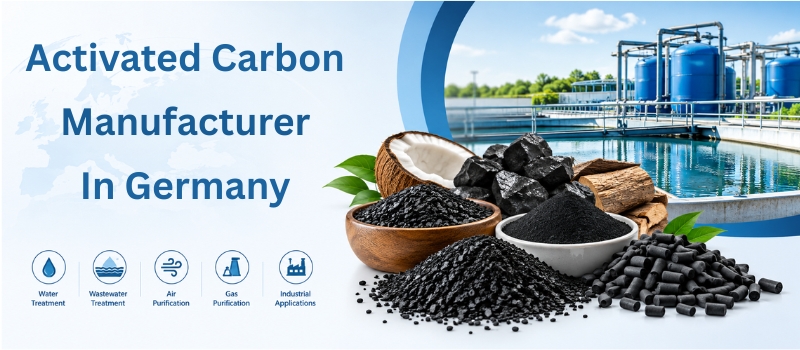
German industrial buyers sourcing activated carbon need more than a competitive price per tonne. The carbon grade must suit the application, process conditions and target contaminants, while consistent quality, technical documentation and dependable supply are equally important.
MICBAC India is an India-based activated carbon manufacturer supplying international markets with Granular Activated Carbon (GAC), Powdered Activated Carbon (PAC) and Activated Carbon Pellets. The company manufactures activated carbon using coconut shell, coal and wood-based raw materials and states an annual production capacity of 20,000 metric tonnes.
For companies searching for an Activated Carbon Manufacturer in Germany, MICBAC provides an international sourcing option from India. The important consideration is not simply where the manufacturer is located, but whether its product specifications, quality controls, documentation, samples and export arrangements meet the requirements of the German buyer and application.
Activated Carbon Manufacturer in Germany for Industrial Applications
Activated carbon is an engineered adsorption material, and different grades are designed for different process requirements. A carbon suitable for water filtration may not be appropriate for industrial wastewater containing larger organic molecules. Similarly, a liquid-phase treatment grade may not be suitable for an air or gas purification system.
German water treatment companies, environmental engineering firms, manufacturers, distributors and industrial users should therefore evaluate activated carbon based on the application and operating conditions, rather than selecting a product only by price or one headline specification.
Important considerations can include raw material, pore structure, particle size, hardness, iodine number, moisture, ash, bulk density and adsorption characteristics. Process factors such as flow rate, contact time, contaminant concentration and treatment objectives also influence carbon selection.
For international procurement, the supplier’s ability to provide technical specifications, samples, Certificate of Analysis (CoA), Safety Data Sheet (SDS), consistent batches and export documentation can be just as important as the quoted price.
Activated Carbon Products Available from MICBAC India
Granular Activated Carbon
Granular Activated Carbon is commonly used in fixed-bed adsorption systems where water, wastewater or another process stream passes through a carbon bed.
MICBAC offers coconut shell and coal-based GAC in different particle sizes. Coconut shell grades are generally associated with a highly microporous structure, while coal-based grades can provide a broader combination of micropores, mesopores and macropores.
Depending on the grade and application, GAC can be used for water treatment, wastewater polishing, dechlorination, organic contaminant removal, industrial filtration and selected air or gas treatment processes.
The appropriate grade should be selected according to the target contaminant and system conditions rather than simply choosing the carbon with the highest iodine number.
Powdered Activated Carbon
Powdered Activated Carbon is generally dosed directly into a process and mixed with the treated stream before the carbon is separated.
MICBAC offers PAC based on coconut shell, coal and wood feedstocks, with different mesh sizes and technical characteristics. Typical applications can include wastewater treatment, industrial effluent treatment and liquid-phase decolourisation.
PAC selection should consider the contaminant, required adsorption performance, dosage conditions, contact time and the filtration or separation process used after treatment.
Activated Carbon Pellets
Pelletised activated carbon is manufactured in cylindrical form and is commonly considered for fixed-bed air and gas treatment applications where particle geometry, mechanical strength and pressure drop are important.
MICBAC supplies activated carbon pellets using coconut shell and coal-based raw materials, with different pellet dimensions available. The appropriate specification depends on factors such as gas composition, target contaminant, residence time and system design.
Coconut Shell vs Coal-Based Activated Carbon
The choice between coconut shell and coal-based activated carbon should be based on the adsorption objective rather than raw material preference alone.
Coconut shell activated carbon generally has a high proportion of micropores, which can make certain grades suitable for smaller molecules and applications where micropore structure is advantageous.
Coal-based activated carbon can provide a broader pore structure containing micropores, mesopores and macropores. Certain coal-based grades can therefore be suitable for larger molecules and more complex industrial contaminants.
However, raw material does not determine performance by itself. Activation conditions, pore distribution, surface chemistry, particle size and actual operating conditions also influence adsorption behaviour.
For critical applications, testing a representative sample under realistic process conditions can provide more useful information than comparing catalogue specifications alone.
How to Select the Right Activated Carbon
The correct activated carbon specification should be based on the application rather than a single performance parameter.
Key characteristics may include:
- Iodine number: commonly associated with micropore adsorption capacity, but a higher value does not automatically mean better performance for every application.
- Methylene blue value: can provide useful information about adsorption behaviour involving larger molecules and colour bodies.
- Surface area: indicates the available adsorption surface, although BET surface area alone cannot predict full-scale performance.
- Pore size distribution: helps assess whether the carbon structure is appropriate for the size of the target molecules.
- Moisture and ash: relevant to delivered product composition, handling and application requirements.
- Hardness: particularly important for GAC used in fixed beds where abrasion and attrition can result in carbon losses.
- Bulk density: relevant to bed-volume calculations, loading and transportation.
- Particle size: influences pressure drop, mass transfer and handling.
- pH: may be important when carbon is used with sensitive process streams.
- Contact time and flow rate: determine how much opportunity the carbon has to adsorb contaminants.
- Contaminant type and concentration: ultimately influence which pore characteristics and adsorption properties are required.
This is why a technically appropriate carbon should be selected around the actual contaminant and process conditions, not simply the highest advertised specification.
Why Evaluate MICBAC India as an Activated Carbon Manufacturer?
MICBAC India states that it has manufactured activated carbon since 1992 and supplies international markets. Its product range includes coconut shell GAC, coal-based GAC, powdered activated carbon and activated carbon pellets, with coconut shell, coal and wood used across its activated carbon range.
The company states an annual production capacity of 20,000 MT and supplies customers across multiple international markets.
For buyers evaluating an international manufacturer, the ability to discuss specifications before ordering can be valuable. MICBAC states that selected parameters can be customised according to requirements such as iodine value, mesh size, moisture, ash, hardness, surface area and pore structure.
Its website also describes a sample programme in which samples can be supplied with relevant technical documentation, including a Certificate of Analysis and Safety Data Sheet.
German buyers should still evaluate any proposed grade against their own approved specification, application requirements, sample results, documentation, commercial terms and shipping arrangements.
What German Buyers Should Check Before Ordering
A technical datasheet is only the starting point when evaluating an activated carbon manufacturer or supplier.
A Certificate of Analysis (CoA) helps buyers review measured characteristics for a supplied batch, while an SDS provides important information for handling, storage and transport. Parameters such as particle size, moisture, ash, hardness, iodine number and bulk density should be assessed against the actual application requirements.
Samples are particularly useful when introducing a new carbon into an existing treatment system. Application testing can help determine whether a proposed grade is suitable before a larger procurement commitment is made.
For recurring requirements, buyers should also consider manufacturing capacity, batch consistency, packaging, export documentation and the supplier’s ability to support repeat orders.
Supplying Activated Carbon from India to Germany
International sourcing requires additional planning compared with domestic procurement.
Before shipment, buyers and suppliers should establish responsibilities for export documentation, packaging, container planning, freight coordination and applicable import requirements.
For larger orders, container utilisation and shipment frequency can influence the overall landed cost. Lead-time planning is also important where activated carbon is a critical consumable.
The commercial comparison should therefore consider product price, freight, insurance where applicable, import-related costs, handling and other logistics expenses, rather than comparing manufacturers only on their quoted price per tonne.
Applications of Activated Carbon in Germany
Activated carbon is used across a range of industrial and environmental applications, including:
- Water treatment and filtration
- Wastewater and industrial effluent treatment
- Industrial process-water purification
- Air purification
- Gas treatment
- Food and beverage processing
- Pharmaceutical processing
- Chemical processing
- Liquid decolourisation
- Environmental and pollution-control applications
The appropriate carbon form and grade depend on the contaminant, process conditions, contact method and required adsorption characteristics.
Why Price Per Tonne Is Not the Only Factor
The lowest purchase price does not necessarily represent the lowest overall treatment cost.
A carbon that is not technically suitable may require higher consumption, more frequent replacement or increased dosing. Additional costs can also result from transportation, disposal, labour, downtime and changes in treatment performance.
German procurement teams should therefore consider total landed and operating cost alongside product specifications and supplier reliability.
Request a Sample or Technical Recommendation
If you are sourcing activated carbon for an industrial application in Germany, providing detailed process information allows the manufacturer to assess the requirement more effectively.
Useful information includes:
- Application and target contaminant
- Liquid or gas phase
- Flow rate
- Contact time
- Existing carbon specification
- Required particle size
- Expected order quantity
- Packaging requirements
- Delivery destination in Germany
- Required technical and shipping documentation
MICBAC India offers activated carbon products for international industrial applications and provides a sample programme for product evaluation. Requesting a sample and comparing it with your current specification can be a practical first step when evaluating a new supplier or replacing an existing carbon grade.
Frequently Asked Questions
What should I look for in an activated carbon manufacturer in Germany?
Consider manufacturing capability, technical specifications, product range, batch consistency, documentation, samples, packaging, export experience, production capacity and the supplier’s ability to support your application.
Can an Indian activated carbon manufacturer supply buyers in Germany?
Yes. An India-based manufacturer can supply German buyers when the product specification, commercial terms, export documentation, shipping arrangements and applicable import requirements are properly addressed.
Which activated carbon is suitable for water treatment?
There is no single grade for every water-treatment application. Coconut shell and coal-based GAC may be suitable for different contaminants and operating conditions. Selection should consider the target contaminant, particle size, contact time and required adsorption characteristics.
Is coconut shell activated carbon better than coal-based activated carbon?
Neither is universally better. Coconut shell carbon generally has a more microporous structure, while coal-based carbon can provide a broader pore distribution. Suitability depends on the contaminant and treatment conditions.
What specifications should I request from an activated carbon supplier?
Depending on the application, request iodine number, methylene blue value, surface area, pore structure information, moisture, ash, hardness, bulk density, particle size, pH and relevant test methods.
What documents should I request before purchasing activated carbon?
A technical datasheet and Certificate of Analysis are useful for reviewing product characteristics. An SDS should also be requested for handling and transport information. Additional documents may depend on the application and buyer’s requirements.
What is the difference between GAC and PAC?
GAC consists of larger particles and is commonly used in fixed-bed systems. PAC is a finer powder generally dosed directly into a process. The appropriate form depends on system design and how the carbon will contact the process stream.
Can I request an activated carbon sample before bulk purchasing?
MICBAC advertises a sample programme for product evaluation. A sample can help buyers assess a proposed grade against their existing specification or application requirements before placing a larger order.