
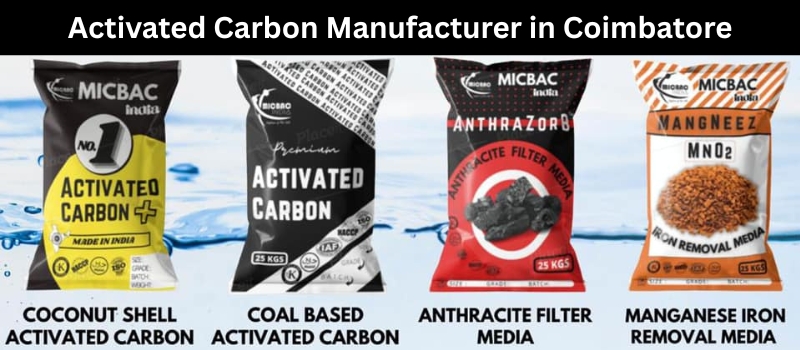
Industries in Coimbatore use filtration and purification processes across water treatment, wastewater management, manufacturing, food and beverage processing, pharmaceutical applications, air treatment and other industrial operations. Activated carbon supports these processes through adsorption, helping reduce selected organic compounds, colour, taste, odour and other impurities.
For businesses looking for an Activated Carbon Manufacturer in Coimbatore, selecting the right carbon grade is more important than comparing price or a single headline specification. The suitable product depends on the target contaminant, process conditions, carbon form, adsorption requirements and treatment system.
MICBAC India manufactures and supplies activated carbon for industrial requirements in granular, powdered and pelletised forms. Buyers can discuss product selection based on their application, technical specifications, quantity and packaging requirements.
Activated Carbon Products Available from MICBAC
Different treatment systems require different carbon forms and characteristics. MICBAC supplies:
| Product | Typical applications |
|---|---|
| Granular Activated Carbon (GAC) | Water treatment, wastewater polishing, dechlorination, industrial filtration and purification |
| Powdered Activated Carbon (PAC) | Wastewater treatment, effluent treatment and liquid-phase applications |
| Pelletised Activated Carbon | Air purification, gas purification and selected gas-phase applications |
The appropriate product depends on the treatment objective, contaminant and operating system rather than product form alone.
Granular Activated Carbon
Granular Activated Carbon is commonly used in fixed-bed filtration systems. Water or another process stream passes through a carbon bed while contaminants are adsorbed within the carbon’s pore structure.
For buyers comparing a Granular Activated Carbon Supplier in Coimbatore, particle size, adsorption characteristics and other technical specifications should be considered alongside the filtration system and target contaminant.
GAC may be considered for:
- Water treatment
- Wastewater polishing
- Dechlorination
- Taste and odour control
- Selected organic contaminant removal
- Industrial process filtration
- Air and gas purification
Powdered Activated Carbon
Powdered Activated Carbon has a smaller particle size and is generally added directly to a process stream. It can be useful where adsorption needs to occur within a liquid treatment process rather than through a fixed carbon bed.
A Powdered Activated Carbon Supplier in Coimbatore should be able to discuss the intended application, dosing requirements and relevant product specifications.
PAC may be considered for:
- Industrial wastewater treatment
- Effluent treatment
- Liquid decolourisation
- Selected dissolved organic contaminant removal
- Process applications requiring direct carbon dosing
Pelletised Activated Carbon
Pelletised activated carbon is formed into cylindrical particles and is commonly considered for gas-phase applications. Particle geometry, mechanical strength and pressure-drop characteristics can be important when carbon is used in air or gas treatment equipment.
Applications may include:
- Air purification
- Gas purification
- Odour control
- Industrial emission treatment
- Process gas filtration
The appropriate pellet size and carbon characteristics depend on the equipment, gas composition and operating conditions.
Activated Carbon for Water and Wastewater Treatment in Coimbatore
Water and wastewater treatment requirements differ from one process to another. Activated carbon may be used to reduce selected organic compounds, colour, taste, odour and other contaminants as part of a treatment or polishing process.
For Activated Carbon for Water Treatment in Coimbatore, buyers should consider the water source, target contaminant, concentration, flow rate, contact time and treatment configuration.
Activated Carbon for Wastewater Treatment should similarly be selected according to the composition of the effluent and the required treatment objective. Carbon may be used as a polishing stage or within a wider treatment process.
Key considerations include:
- Target contaminant and concentration
- Flow rate
- Contact time
- Carbon bed depth
- Particle size
- Adsorption requirements
- Moisture and ash limits
- Operating conditions
- Replacement or regeneration requirements, where applicable
Activated Carbon for Industrial Applications
Activated carbon is used across industrial processes where adsorption can help address specific contaminants. However, there is no universal carbon grade suitable for every industrial application.
An Industrial Activated Carbon Supplier in Coimbatore should therefore consider the contaminant, treatment objective and process conditions before recommending a product.
Industrial applications may include:
- Process water treatment
- Industrial wastewater treatment
- Effluent polishing
- Decolourisation
- Organic contaminant removal
- Solvent and vapour adsorption
- Odour control
- Industrial filtration
- Environmental and pollution-control applications
Requirements can differ considerably between liquid- and gas-phase systems, even when both are used for purification.
Activated Carbon for Air and Gas Purification
Activated carbon can adsorb a range of gaseous compounds and is used in air and gas purification systems. Pelletised carbon may be considered for some gas-phase applications, depending on the equipment and contaminants involved.
Potential applications include:
- Industrial air purification
- Gas purification
- Odour reduction
- Selected volatile organic compound removal
- Process gas treatment
For these applications, buyers should provide information such as gas composition, contaminant concentration, temperature, humidity, flow rate and contact conditions. These factors can influence adsorption behaviour and carbon consumption.
Activated Carbon for Pharmaceutical, Food and Beverage Applications
Activated carbon can be used in selected pharmaceutical, food and beverage processes where purification, decolourisation or removal of specific organic impurities is required.
For pharmaceutical applications, the appropriate carbon grade should be established according to the process, intended use, product specifications and applicable requirements.
In food and beverage processing, activated carbon may be considered for selected liquid purification and decolourisation applications. Buyers should confirm the required product specifications and documentation before purchasing.
An industrial carbon should not automatically be assumed to be suitable for a specialised application simply because it has a high adsorption specification. Intended use, product characteristics and applicable requirements should always be considered.
Coconut Shell, Coal-Based and Wood-Based Activated Carbon
MICBAC manufactures activated carbon using coconut shell, coal and wood. These raw materials can produce different pore structures and adsorption characteristics, making raw material selection relevant to certain applications.
Coconut shell activated carbon is generally associated with a highly microporous structure and may be considered for adsorption involving smaller molecules.
Coal-based activated carbon can provide a broader pore structure containing micropores, mesopores and macropores, which may be useful for larger molecules and more complex industrial contaminants.
Wood-based activated carbon can have pore characteristics that suit selected applications, depending on how the carbon is manufactured and activated.
Raw material alone does not determine performance. Activation method, pore structure, contaminant characteristics and operating conditions all influence whether a particular carbon is appropriate for a treatment process.
How to Choose the Right Activated Carbon
Selecting activated carbon starts with understanding the application.
Identify the target contaminant
The contaminant’s chemical characteristics, concentration and molecular size influence adsorption. Carbon that performs appropriately for one contaminant may not provide the same results for another.
Choose the appropriate carbon form
GAC is commonly used in fixed-bed systems, PAC is generally used for direct dosing into liquid processes, and pelletised carbon is frequently considered for gas and air treatment.
Compare relevant specifications
Depending on the application, buyers may need to review:
- Iodine number
- Surface area
- Pore size distribution
- Methylene blue value, where applicable
- Moisture
- Ash content
- Hardness
- Bulk or apparent density
- Particle size
- pH
A higher iodine number does not automatically make one carbon suitable for every application. Pore structure, contaminant characteristics and operating conditions also influence adsorption suitability.
Consider operating conditions and testing
Flow rate, contact time, temperature, pressure and contaminant concentration can affect carbon performance and consumption. Where practical, laboratory or pilot testing can help assess whether a particular grade is appropriate for the intended system.
Review quality and documentation
Industrial buyers should request the applicable product specification, Certificate of Analysis (CoA), Safety Data Sheet (SDS) and other relevant documentation. Where a specific certification or regulatory requirement applies, its availability should be confirmed before ordering.
Why Evaluate MICBAC as an Activated Carbon Manufacturer and Supplier?
MICBAC India manufactures activated carbon using coconut shell, coal and wood and supplies granular, powdered and pelletised activated carbon for industrial requirements.
For businesses searching for an activated carbon manufacturer in Coimbatore, having access to different product forms and raw-material options allows the requirement to be discussed according to the application rather than treated as a one-size-fits-all product.
When evaluating MICBAC or another activated carbon supplier in Coimbatore, buyers should consider manufacturing capability, product range and batch consistency. Technical specifications and application-specific recommendations are important because the carbon grade needs to match the treatment objective.
Product samples, CoA, SDS, applicable certifications, packaging options and quality-control information can help buyers evaluate product suitability. Production capacity, export experience, logistics, lead times and the ability to support recurring requirements are also relevant when planning ongoing supply.
Supplying Activated Carbon to Coimbatore
Businesses sourcing Activated Carbon in Coimbatore should provide enough technical and commercial information for the supplier to understand the requirement accurately.
When requesting product information or a quotation, provide:
- Application and treatment objective
- Target contaminant
- Liquid- or gas-phase use
- Required carbon form
- Particle size
- Flow rate and contact time
- Adsorption requirements
- Moisture, ash or hardness limits
- Packaging requirements
- Expected order quantity
- Delivery destination
- Required supply schedule
- Documentation requirements
This information can help narrow down suitable product grades and avoid selecting carbon based only on a general specification.
For bulk procurement, total cost should also be considered rather than comparing only the price per tonne. Carbon consumption, replacement frequency, dosing, transport, handling, disposal, labour, downtime and treatment requirements can all affect the overall cost of using a particular product.
Frequently Asked Questions
What is activated carbon used for?
Activated carbon is primarily used for adsorption. Depending on the grade and application, it can help reduce selected organic compounds, colour, taste, odour and other contaminants from liquids or gases.
What types of activated carbon are available?
Common forms include granular activated carbon, powdered activated carbon and pelletised activated carbon. The appropriate form depends on the treatment system and application.
How do I choose activated carbon for water treatment?
Start with the target contaminant and water characteristics. Then consider flow rate, contact time, particle size, adsorption requirements and relevant specifications. Application testing can help confirm suitability.
What is the difference between GAC and PAC?
GAC is commonly used in fixed-bed filtration systems, while PAC is generally added directly to liquid processes. Their particle size, handling and application methods are therefore different.
Can activated carbon be used for industrial wastewater treatment?
Yes. Activated carbon can be incorporated into selected industrial wastewater treatment and polishing processes where adsorption of specific dissolved contaminants, colour or organic compounds is required. Suitability depends on the wastewater characteristics.
What specifications should I check before buying activated carbon?
Depending on the application, review iodine number, surface area, pore characteristics, particle size, moisture, ash, hardness, density, pH and methylene blue value where applicable. Application-specific adsorption performance should also be considered.
Does MICBAC supply activated carbon to Coimbatore?
MICBAC India manufactures and supplies activated carbon for industrial requirements. Buyers in Coimbatore can enquire about suitable product forms, grades, technical specifications, packaging and supply requirements.
How can I request product information or a quotation?
Provide the application, target contaminant, required carbon form, quantity, relevant specifications, packaging requirements and delivery destination. This allows the supplier to assess the requirement and discuss suitable options.
Enquire About Activated Carbon for Your Coimbatore Requirement
Selecting an Activated Carbon Manufacturer in Coimbatore or an activated carbon supplier should involve more than comparing product prices. Application suitability, technical specifications, batch consistency, documentation and supply requirements all matter when purchasing for an industrial process.
If your requirement involves water treatment, wastewater treatment, industrial filtration, air purification, gas purification, pharmaceutical processing, food and beverage applications or another industrial process, MICBAC India can discuss relevant activated carbon options based on your requirement.
Share your application, target contaminant, preferred carbon form, quantity, technical specifications, packaging requirements and delivery requirements to enquire about a suitable activated carbon product.